Separation and washing of fibers(6)
author: Frank
2025-10-17
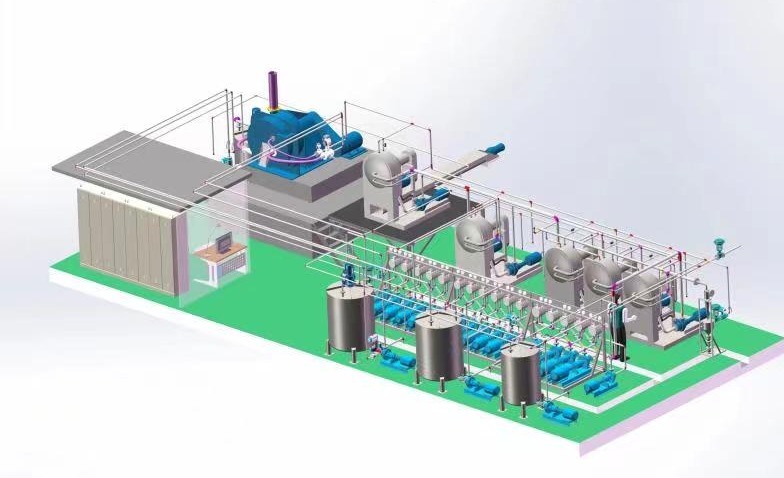
The finely ground slurry enters the fiber washing tank, where it is sent to the first pressure curved screen together with the washing water from the subsequent fiber washing. The crude starch milk is separated under the sieve, and the oversize is washed countercurrent through a 6-7 pressure curved sieve. Washing process water is added from the front of the last screen, passes through the screen surface, and moves forward step by step with the washed free starch until it reaches the washing tank in front of the first screen. Here, it is combined with the finely ground slurry and enters the first pressure curved sieve to separate out the crude starch milk. The starch milk is then merged with the crude starch milk separated before fine grinding and enters the starch separation process. The fiber, skin residue and washing water on the screen surface flow countercurrent and move from the first screen to the subsequent screens. After multiple washing and screening, they are discharged from the last curved screen, and then dehydrated by a screw extruder., enter the fiber drying section.
Growing Cassava: From Land Choice & Planting To Harvest
Main By-products of Corn Starch Production Line and Their Primary Utilization Methods
Related Article
There are different methods for making starch from sweet potato, it includes manual production and industrial production method. Regardless of manual production or industrial production method, sweet potato starch making is relatively simple and the process is not complicated. The main process of making starch from sweet potato is cleaning, crushing, filtering, dehydrating, drying and packaging of sweet potato starch.
How to make starch from sweet potato?
This article provides a brief introduction to what cassava starch is and its production process.
How is cassava starch made from cassava?