Differences Between Large and Small Corn Production Lines
Large-scale corn production lines differ significantly from small-scale production lines. These differences are specifically seen in the following areas:
1. Level of Automation
-
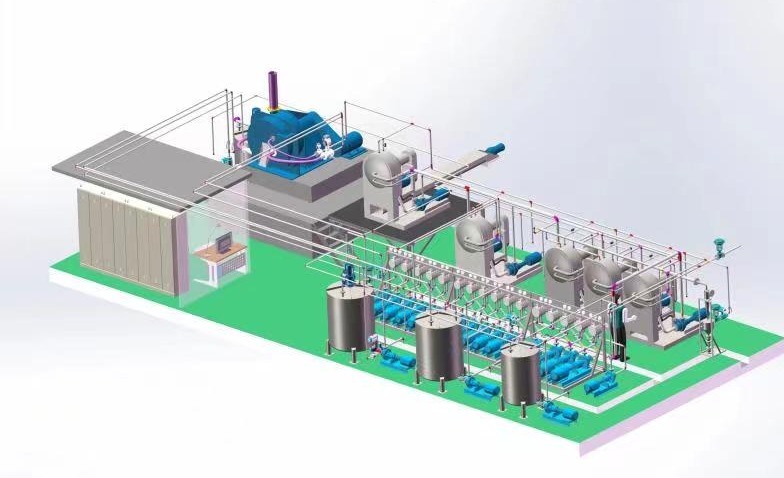
Large-Scale Production Lines: These lines are almost fully automated across the entire process, from corn cleaning to finished product packaging. Control is centralized via PLC (Programmable Logic Controller), minimizing human intervention and ensuring consistent product quality.
-
Small-Scale Production Lines: These generally rely more on manual operation. The adjustment of equipment and component parameters is heavily dependent on manual labor. While initial construction investment is low, they require a large workforce for subsequent operation.
2. Economic Efficiency
-
Large-Scale Production Lines: These typically include by-product processing lines, allowing for the comprehensive utilization of major by-products (germ, fiber, corn protein, etc.). This results in higher overall economic efficiency.
-
Small-Scale Production Lines: Due to lower raw material processing capacity, constructing auxiliary by-product lines is usually less cost-effective. By-products are often handled directly by the user, leading to a lower overall economic efficiency compared to large lines.
3. Environmental Protection and Recycling
-
Large-Scale Production Lines: These lines typically incorporate integrated energy utilization and water recycling systems, featuring specialized circulation systems for energy and water conservation. They consume less energy and water per unit of output.
-
Small-Scale Production Lines: These generally do not include water recycling systems, resulting in higher water consumption per unit of output and greater environmental pressure.
Juan Hu
Marketing Manager
Email: juan.hu@liretecgroup.com
Main By-products of Corn Starch Production Line and Their Primary Utilization Methods
Fine grinding and extraction(5)
Related Article