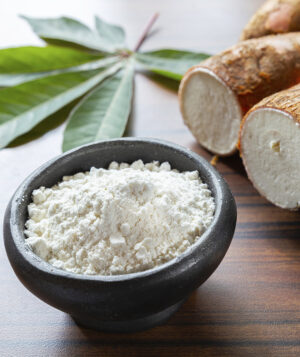
China Cassava Starch Market Mid-2026 Report: High-Level Fluctuations Amid Severe Price Inversion and Deep Port Destocking
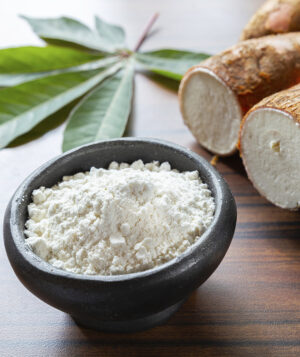
In the first half of 2026, driven by raw material crop reductions in major Southeast Asian producing countries and high international offers, the price center of China's domestic cassava starch climbed month by month.
As of mid-2026, domestic spot prices for cassava starch remain consistentlyhigh. Mainstream spot quotes for Thai starch range from 4,400 to 4,950 RMB/ton, Vietnamese starch ranges from 4,200 to 4,400 RMB/ton, and domestic mid-to-high-end cassava starch is quoted at 4,400 to 4,600 RMB/ton. In certain ports like Qingdao, the ex-warehouse tax-inclusive price for premium Thai brands (e.g., Rose Brand) even touched 5,100 RMB/ton.
By mid-2026, international offers from Southeast Asia (Thailand FOB Bangkok at 660-700 USD/ton) are significantly higher than Chinese domestic spot prices. This has led to negative theoretical import margins for domestic traders (with losses exceeding 200 RMB per ton in June), heavily dampening import enthusiasm.
2. Supply Side: Destocking and Structural Differentiation
Due to the price inversion causing a drop in import volumes, the domestic market in 2026 is undergoing an aggressive destocking cycle.
By late June 2026, cassava starch inventories at China's major ports (such as Qingdao Port) dropped to 130,000 - 140,000 tons, down approximately 20.59% month-on-month, and plunging 61.43% year-on-year.
In China's cumulative cassava starch imports from January to April 2026, Vietnam firmly holds the top spot with 955,300 tons (51.58% share). Thailand's share shrank to 536,400 tons (28.96%) due to uncompetitive pricing, while Laos (17.60%) and Cambodia (1.72%) continue to serve as vital supply supplements leveraging cross-border trade advantages.
3. Demand Side: Off-Season and Substitution Dynamics
Entering mid-year (May to July), traditional downstream bulk consumption sectors like vermicelli and starch noodles hit their slack season. Terminal factories are running at low operating rates and resist high starch prices, limiting purchases to small-scale, rigid-demand replenishment.
Given the elevated cost of cassava starch, industrial buyers frequently arbitrage costs between cassava and domestic corn starch (priced at around 2,930-2,960 RMB/ton in mid-2026). However, domestic corn starch processing operating rates also dipped during mid-2026, providing a bottom floor support for cassava starch pricing.
4. 2026 Market Outlook
Industry analysis indicates that China's domestic cassava starch market will maintain a high-level fluctuating trend overall in the second half of 2026.
With the arrival of the minor crushing season in southern Vietnam in July boosting output slightly, and an expected rational correction in Thai export offers due to THB exchange rate adjustments, theoretical import costs are projected to ease slightly. However, backed by ultra-low port inventories, any downside room for domestic spot prices during the off-season will remain highly limited (estimated at around 50 RMB/ton).
Would you like us to provide a further data chart analysis on the detailed price spread between cassava and corn starch in 2026, or are you interested in hedging and risk mitigation strategies for bulk commodity procurement heading into Q4 2026?
Cassava Starch Market Latest Trends
Analysis of Cassava Starch Import and Export and Market Status from January to April 2026
Related Article