
Indonesia's Corn Starch Market Outlook
2025-06-13
Indonesia’s corn starch market has witnessed steady growth in recent years, driven by increasing demand from various industries such as food and beverage, pharmaceuticals, paper, and textiles. Maize starch, also known as corn starch, plays a crucial role in food processing, adhesive manufacturing, and bioplastics production.
With Indonesia being one of the largest economies in Southeast Asia, the demand for corn starch is rising due to its versatile applications. This article provides an in-depth analysis of the market trends, supply and demand dynamics, key players, and future outlook of the corn starch industry in Indonesia.
Current Market Trends in Indonesia
The Indonesian corn starch market is shaped by several factors, including:
The Indonesian corn starch market is shaped by several factors, including:
Growing Food & Beverage Industry
The food and beverage sector accounts for a significant share of the maize starch market. Corn starch is widely used as a thickening agent in sauces, soups, and bakery products. The increasing consumption of processed and convenience foods is driving the demand for maize starch.
The food and beverage sector accounts for a significant share of the maize starch market. Corn starch is widely used as a thickening agent in sauces, soups, and bakery products. The increasing consumption of processed and convenience foods is driving the demand for maize starch.
Rise in Industrial Applications
Apart from food applications, maize starch is widely used in the textile industry as a stiffening agent, in paper manufacturing for coating, and in pharmaceuticals for tablet binding.
Apart from food applications, maize starch is widely used in the textile industry as a stiffening agent, in paper manufacturing for coating, and in pharmaceuticals for tablet binding.
Shifts in Consumer Preferences
The rising trend of clean-label and gluten-free products has encouraged food manufacturers to use corn starch as a natural alternative in product formulations.
The rising trend of clean-label and gluten-free products has encouraged food manufacturers to use corn starch as a natural alternative in product formulations.
Government Policies and Trade Regulations
The Indonesian government has implemented several policies to support the agricultural and food processing industries, which indirectly impact the maize starch market.
The Indonesian government has implemented several policies to support the agricultural and food processing industries, which indirectly impact the maize starch market.
Applications of Corn Starch in Various Industries
Maize starch is a key raw material in multiple industries:
Maize starch is a key raw material in multiple industries:
Food & Beverage: Used as a thickener, stabilizer, and texturizer in processed foods, dairy, bakery, and confectionery products.
Textile: Acts as a sizing agent for strengthening fabrics and improving weaving efficiency.
Do you know corn corps?
Global Corn Production Set to Increase, Potentially Boosting Corn Starch and By-product Output
Related Article
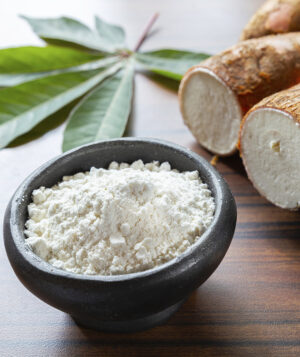
Track the latest insights on cassava starch price trend and forecast with detailed analysis of regional fluctuations and market dynamics across North America, Latin America, Central Europe, Western Europe, Eastern Europe, Middle East, North Africa, West Africa, Central and Southern Africa, Central Asia, Southeast Asia, South Asia, East Asia, and Oceania.
Cassava Starch Price Trend
Cassava starch is gaining traction as a sustainable, versatile, and cost-effective raw material.
Cassava Starch Market Latest Trends
In 2026, China's cassava starch market is generally characterized by "tight raw material supply and high prices in the first half of the year, coupled with a severe inverted price differential between domestic and international markets, leading to sharp port destocking by mid-year."
China Cassava Starch Market Mid-2026 Report: High-Level Fluctuations Amid Severe Price Inversion and Deep Port Destocking
From January to April 2026, China's cassava starch imports mainly came from Vietnam, Thailand, Laos, Cambodia, and other countries. Specifically, imports from Vietnam were 955,300 tons, accounting for 51.58% of the total; from Thailand, 536,400 tons (28.96%); from Laos, 326,000 tons (17.60%); from Cambodia, 31,800 tons (1.72%); and from Indonesia, 1,400 tons (0.07%).
Analysis of Cassava Starch Import and Export and Market Status from January to April 2026